Dog Aggression on Walks: Canine Reactivity Explained
Why do some dogs bark, growl or lunge at other dogs? Discover the causes of reactive behaviour, practical safety tips and ways to help your dog feel calmer and more confident during walks.
Walking your dog should be enjoyable for both you and your pet. Regular walks provide exercise, mental stimulation and opportunities to explore new surroundings. However, some dogs find everyday walks stressful.
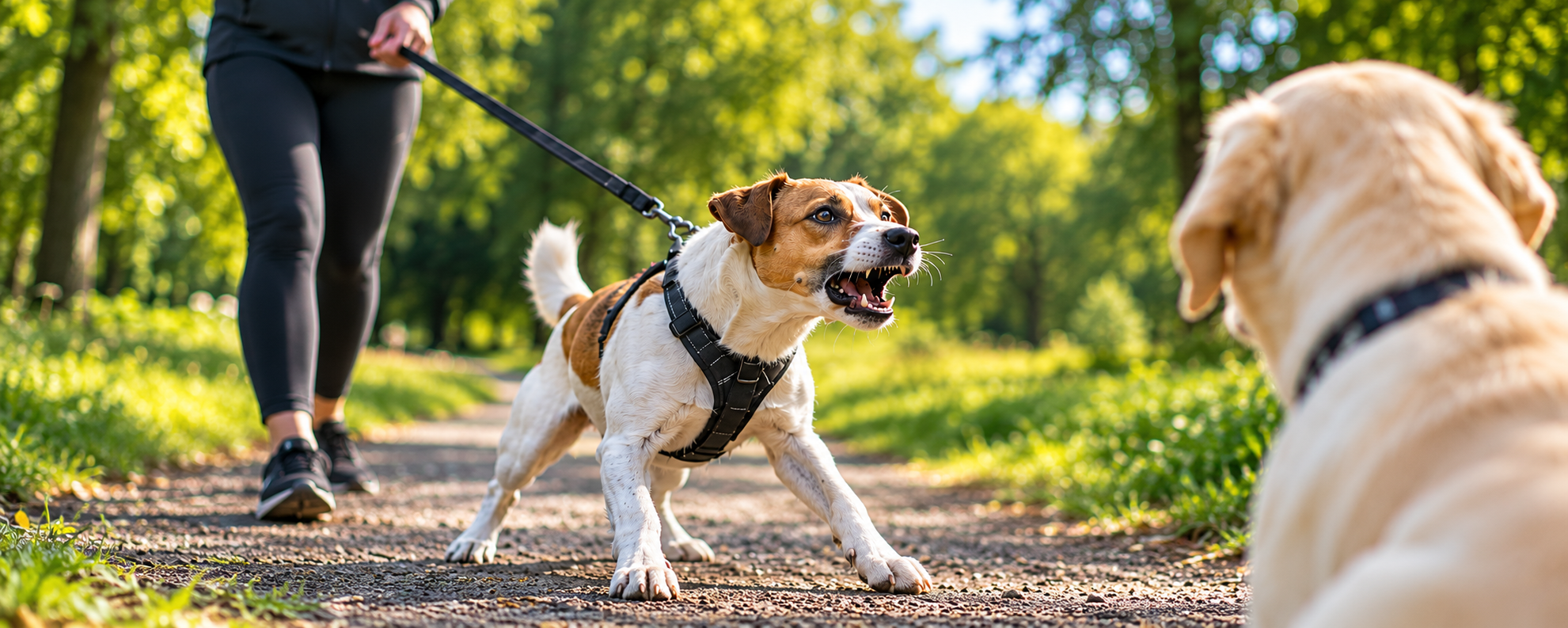
A reactive dog may bark, growl, pull on the lead or lunge towards unfamiliar dogs and people. These behaviours can make walking difficult, especially in busy parks and public spaces around Peterborough.
At Doggy Paws, we understand that every dog has different needs. Our dog walking services in Peterborough focus on suitable exercise, individual care and positive experiences.
Understanding why your dog reacts is the first step towards safer, calmer and more enjoyable walks.
Why Do Some Dogs Become Aggressive or Reactive on Walks?
Dog aggression on walks can have several causes. Although barking and lunging may appear aggressive, they do not always mean a dog intends to attack.
Some dogs react because they feel frightened or threatened. Others become frustrated because they cannot approach another dog while attached to a lead.
Common causes of reactive behaviour
- Fear or anxiety around unfamiliar dogs or people.
- Previous frightening experiences or attacks.
- Limited positive socialisation during puppyhood.
- Frustration when prevented from approaching another dog.
- Pain, illness or physical discomfort.
- Overexcitement in busy environments.
For example, a dog that has previously been attacked may associate approaching dogs with danger. Barking or growling can become a way of trying to create distance.
Similarly, a friendly but excitable dog may bark and pull because it wants to greet another dog. This is why reactivity and aggression are not necessarily the same thing.
If your dog's behaviour changes suddenly, arrange a veterinary examination. Pain or illness can sometimes contribute to behavioural problems.
Common Signs of Dog Aggression and Reactivity
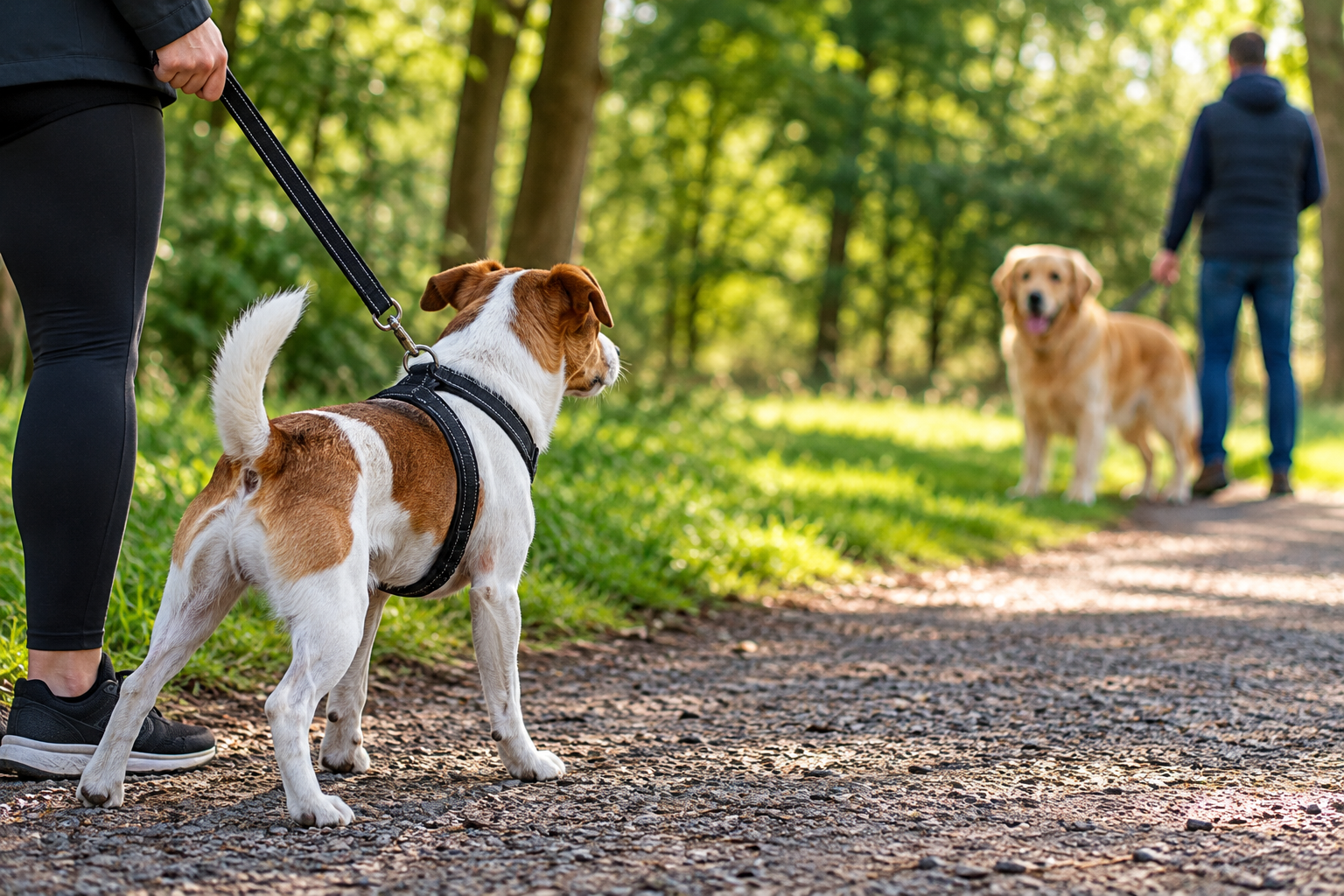
Recognising early warning signs can help prevent difficult encounters during dog walks. Dogs often communicate through body language before they begin barking or lunging.
Early warning signs
- A stiff or tense body.
- Staring intensely at another dog.
- Ears moving backwards.
- Repeated lip licking or yawning.
- A tucked tail or lowered posture.
- Difficulty responding to familiar commands.
- Sudden freezing or reluctance to move.
These signals may indicate that your dog is uncomfortable. Some dogs become unusually quiet before reacting.
More obvious reactive behaviour
As anxiety or excitement increases, your dog may bark repeatedly, growl, pull strongly on the lead, lunge, jump or snap.
Not every dog displays the same warning signs. Learning your dog's individual behaviour is therefore essential.
Why does my dog bark at other dogs?
Barking can communicate fear, frustration, excitement or a desire for more space. Observe what happens before the barking begins.
Does your dog react only when another dog gets close? Does it behave differently in quiet surroundings? These observations can help a qualified behaviour professional understand the problem.
How to Calm a Reactive Dog During Walks
Helping a reactive dog begins with preventing overwhelming situations. The aim is not to force your dog to tolerate close encounters.
Instead, create opportunities for calm behaviour at a comfortable distance.
Choose quieter walking routes
Busy parks and narrow pathways can make it difficult to avoid other dogs. Consider quieter walking times or open areas where approaching dogs are easier to see.
Give your dog more space
If another dog approaches, calmly increase the distance between them. Crossing the road, changing direction or moving behind a visual barrier may help.
Helpful tip: If your dog is barking, lunging or unable to respond to you, the situation may already be too overwhelming. Move away calmly rather than forcing an interaction.
Reward calm behaviour
Reward-based training can help dogs develop more positive associations with situations they previously found stressful.
When your dog notices another dog at a comfortable distance, offer a suitable treat or another reward it enjoys.
Progress should be gradual and guided by your dog's body language. Avoid deliberately moving closer simply because your dog appears calm once.
Teach a positive turning-away cue
Practise a simple phrase such as "this way" at home. Reward your dog for following you as you turn and walk in another direction.
Once familiar, practise in quiet outdoor environments. This can help you move away from unexpected encounters.
Avoid punishment
Shouting, lead jerking and punishment-based equipment can increase distress. Focus on distance, rewards and professional guidance instead.
Dog Walking and Socialisation in Peterborough
Regular exercise and appropriate social experiences are important for a dog's physical and mental wellbeing.
However, socialisation should never mean forcing a nervous or reactive dog to interact with unfamiliar animals.
Professional dog walking in Peterborough
Doggy Paws offers professional dog walking in Peterborough, including collection and return services.
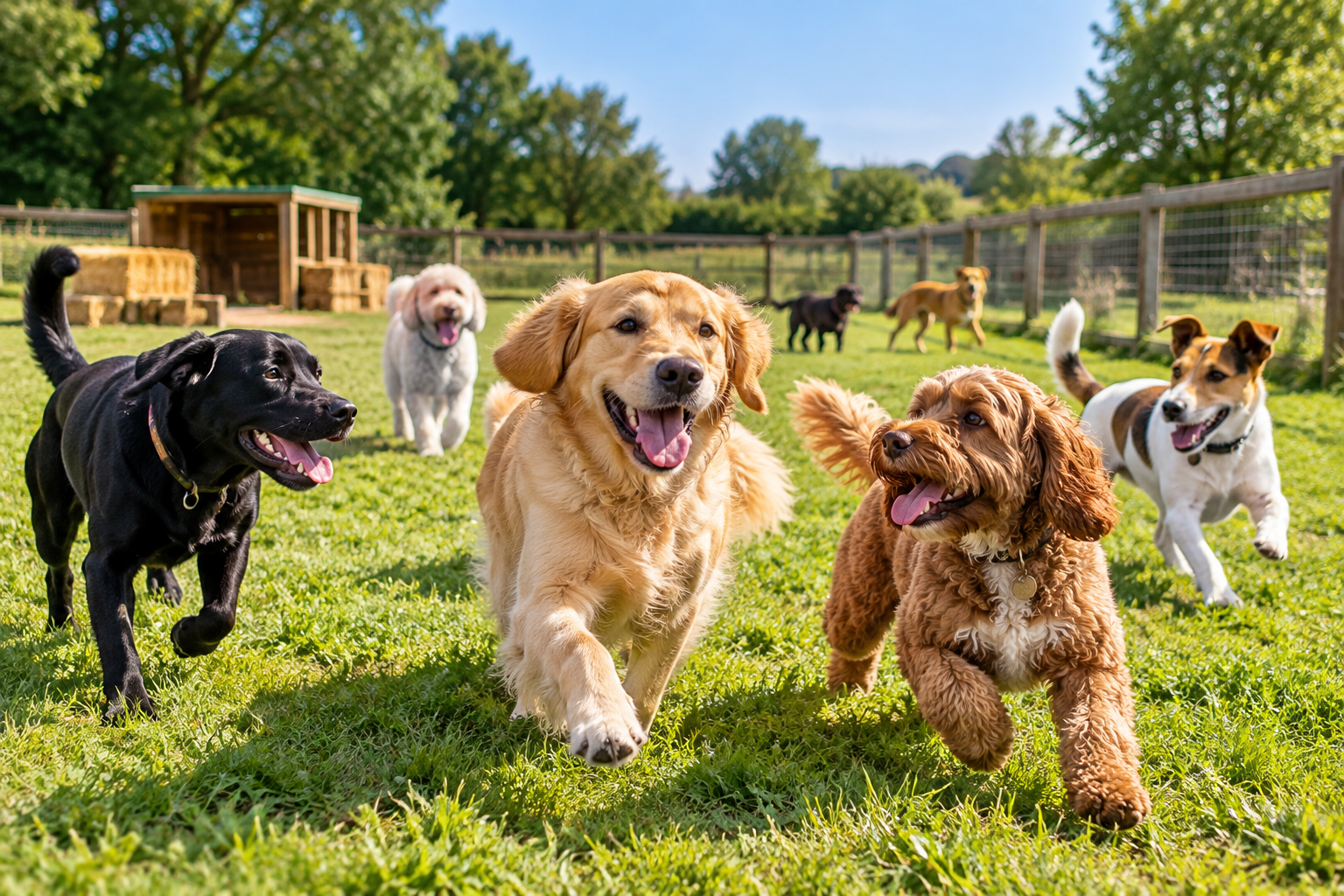
Our secure private field provides suitable dogs with space to exercise, explore and enjoy supervised activities.
Every dog has its own personality and needs. Owners should tell us about any history of aggression, reactivity or previous incidents before arranging care.
Dogs showing aggression towards people or animals require individual assessment and may not be suitable for group walks.
Can doggy daycare help with socialisation?
For dogs that are comfortable around others, doggy daycare in Peterborough can provide exercise, supervised play and regular social opportunities.
At Doggy Paws, suitable dogs enjoy time in our secure field, with collection and return included.
However, daycare is not a treatment for aggression. A dog that becomes frightened or aggressive around others may find a group environment overwhelming.
A veterinary professional or qualified behaviourist should assess these concerns before group daycare is considered.
When Should You Seek Professional Help for Dog Aggression?
Some reactive behaviour can improve with careful management and suitable training. However, owners should seek professional support when behaviour becomes difficult to manage or creates a risk of injury.
When professional advice is important
- Your dog has bitten another dog or person.
- Your dog regularly attempts to bite.
- Walks are becoming difficult to control.
- Fear or aggression is increasing.
- Your dog suddenly develops unusual behaviour.
- Your dog cannot relax around everyday triggers.
Begin with your veterinary practice to rule out pain or other health problems. A qualified clinical animal behaviourist can then help investigate the causes and develop an individual plan.
For dogs presenting a bite risk, positive muzzle training and properly fitted safety equipment may be appropriate.
A comfortable, well-fitted harness can also help some dogs. Equipment choices should suit the individual animal and professional safety advice.
Remember that progress takes time. The aim is to help your dog feel safer, not to make every dog enjoy greeting unfamiliar animals.
Frequently Asked Questions About Reactive Dogs
Why is my dog aggressive towards other dogs on walks?
Fear, frustration, previous experiences and discomfort can all contribute. A qualified behaviourist can help identify the underlying cause.
Can a reactive dog become calmer?
Many dogs can make progress through suitable management and reward-based training. Results depend on the individual dog and circumstances.
Should I let my reactive dog meet other dogs?
Avoid forcing greetings. Keep a comfortable distance and seek professional guidance before introducing close interactions.
Is doggy daycare suitable for an aggressive dog?
Group daycare is not suitable for every dog. Dogs showing aggression should receive professional assessment before group activities are considered.
Where can I find dog walking services in Peterborough?
Doggy Paws provides local dog walking, exercise and daycare services for suitable dogs. Contact our team to discuss your dog's needs.
Give Your Dog the Care They Deserve
Whether your dog enjoys regular walks, supervised group exercise or a busy day of play, choosing the right care is important.
Doggy Paws provides dog walking and daycare services throughout Peterborough for suitable dogs.